
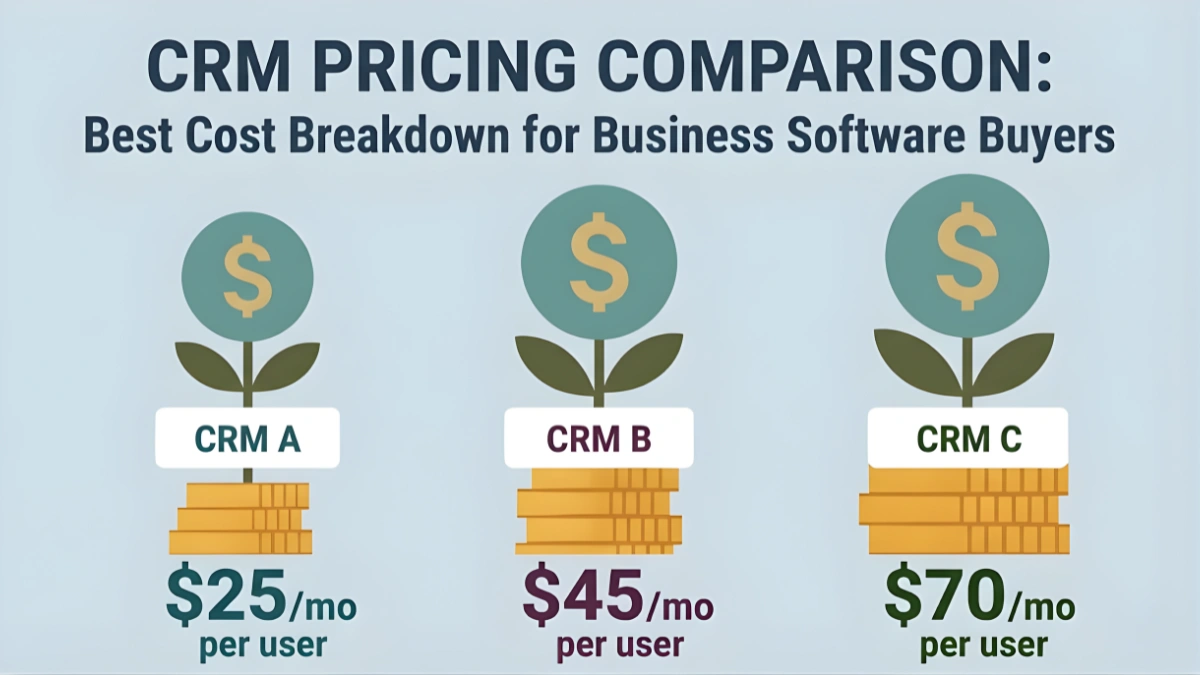
CRM pricing has become one of the biggest decision points for businesses because software costs now directly affect marketing budgets, sales efficiency, and long-term scalability. While many CRM platforms advertise low starting plans, actual spending often increases through user expansion, integrations, automation upgrades, and premium support.
In high-value SaaS markets, keywords related to CRM pricing, software cost comparison, business CRM subscriptions, and enterprise CRM licensing attract strong advertiser demand because businesses actively compare pricing before selecting a platform. Understanding real CRM cost helps companies avoid hidden expenses and choose software that matches growth goals
Why CRM Pricing Matters for Businesses
Software cost affects both short-term budgeting and long-term ROI.
Main reasons pricing matters include:
- User-based cost growth
- Feature upgrade expenses
- Integration charges
- Support costs
- Annual billing impact
This makes pricing analysis essential before purchase.
Common CRM Pricing Models
CRM providers usually follow three pricing structures.
| Pricing Model | Description | Best For |
|---|---|---|
| Per-User Subscription | Monthly cost per active user | Small to mid-size teams |
| Tiered Plans | Pricing by feature level | Growing businesses |
| Enterprise Pricing | Custom contracts | Large organizations |
Popular CRM Platform Price Comparison
| CRM Platform | Starter Plan | Professional Plan | Enterprise Plan |
|---|---|---|---|
| Salesforce | $25/user | $75/user | $300+ |
| HubSpot CRM | Free / $20 | $90/user | Custom pricing |
| Zoho CRM | $14/user | $40/user | $52/user |
| Microsoft Dynamics 365 | $65/user | $95/user | $210/user |
Hidden CRM Costs Businesses Often Miss
Many businesses focus only on subscription price and ignore other expenses.
Common hidden costs include:
- Training fees
- API usage charges
- Storage upgrades
- Premium support
- Marketing add-ons
These can significantly raise total cost.
CRM Cost by Business Size
| Business Type | Typical Annual Cost | Common Choice |
|---|---|---|
| Startup | $500 – $5,000 | HubSpot, Zoho |
| SMB | $10,000 – $50,000 | Zoho, Salesforce |
| Enterprise | $100,000+ | Salesforce, Microsoft |
Which CRM Gives Better ROI
Higher price does not always mean better return.
Businesses usually gain stronger ROI when CRM matches actual workflow rather than buying unnecessary features.
How Businesses Reduce CRM Spending
Best cost-saving methods include:
- Annual billing discounts
- Removing inactive users
- Avoiding unused add-ons
- Negotiating enterprise contracts
FAQs
1. Which CRM is cheapest?
Zoho and HubSpot remain affordable starting points.
2. Which CRM suits enterprises best?
Salesforce and Microsoft remain strong enterprise choices.
3. Are free CRM tools useful?
Yes, especially for early-stage businesses.
4. Can CRM cost increase later?
Yes, scaling often raises cost significantly.
5. Is annual billing cheaper?
Usually yes, with discounts available.
Conclusion: CRM pricing should always be evaluated beyond starting subscription cost because hidden charges, upgrades, and scaling needs often change total investment. Businesses that compare full pricing carefully usually achieve better software ROI and avoid unnecessary spending.
Disclaimer: This article is for informational purposes only. CRM pricing, feature tiers, and subscription plans may change depending on provider updates and market conditions. Businesses should verify official platform pricing before purchasing.