
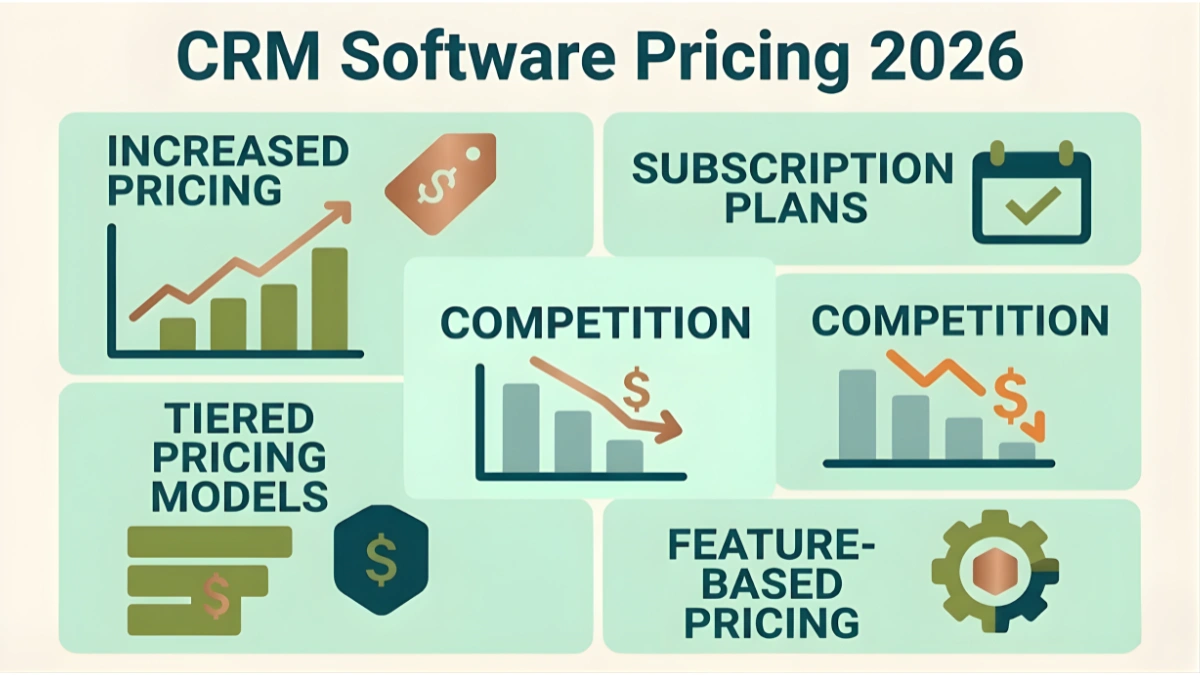
CRM software pricing has become one of the most important software decisions for businesses because customer management tools now influence sales performance, marketing efficiency, support workflows, and long-term software budgets. Many businesses initially focus only on advertised monthly pricing, but real CRM costs often rise through feature upgrades, integrations, onboarding, analytics tools, and user expansion.
In high-value SaaS and enterprise software markets, keywords related to CRM software pricing, subscription costs, business software budgeting, and customer management expenses attract strong advertiser demand because businesses actively compare software costs before selecting long-term platforms
Why CRM Pricing Changes Across Platforms
CRM pricing differs because providers package features at different levels.
Main pricing drivers include:
- Number of users
- Automation access
- Analytics features
- AI tools
- Integration options
These directly affect total software spending.
Common CRM Pricing Models Businesses Compare
Most CRM providers follow flexible pricing structures.
| Pricing Model | Description | Suitable For |
|---|---|---|
| Subscription Pricing | Monthly or yearly per-user billing | Startups and SMBs |
| Tiered Plans | Feature-based pricing levels | Growing businesses |
| Enterprise Contracts | Custom negotiated pricing | Large organizations |
Popular CRM Platform Pricing Overview
| CRM Platform | Starting Price | Mid-Level Plan | Advanced Plan |
|---|---|---|---|
| HubSpot CRM | Free / $20 per user | Marketing upgrades available | Enterprise pricing |
| Zoho CRM | Free / $14 per user | $23 per user | $52 per user |
| Salesforce | $25 per user | $80 per user | $330+ per user |
| Freshworks Freshsales | Free / $15 per user | $39 per user | Enterprise upgrades |
Hidden CRM Costs Businesses Often Miss
Subscription pricing usually does not show full ownership cost.
Common hidden expenses include:
- Data migration
- Team training
- API usage
- Premium support
- Storage expansion
These can significantly increase annual budgets.
Free CRM vs Paid CRM Costs
Free CRM plans often help small businesses begin with limited expense.
Paid plans usually add:
- Workflow automation
- Better reporting
- Advanced integrations
- Higher contact capacity
How Business Size Affects CRM Budget
| Business Type | Typical Annual Cost |
|---|---|
| Startup | $500 – $5,000 |
| SMB | $10,000 – $50,000 |
| Enterprise | $100,000+ |
How Businesses Reduce CRM Spending
Companies often control CRM costs through better planning.
Useful cost-saving methods:
- Annual billing discounts
- Removing inactive users
- Avoiding unnecessary add-ons
- Testing free plans first
Future CRM Pricing Trends
CRM pricing continues changing because software vendors now bundle AI and automation more aggressively.
Main trends include:
- More freemium plans
- AI premium pricing
- Flexible modular billing
FAQs
1. Which CRM starts at lowest cost?
HubSpot and Zoho remain common low-cost options.
2. Why do CRM costs rise later?
More users and advanced features increase pricing.
3. Are free CRM tools practical?
Yes, especially for smaller teams.
4. Do integrations add cost?
Often yes, especially premium tools.
5. Is enterprise pricing always negotiated?
Usually yes, based on scale.
Conclusion: CRM software pricing should always be evaluated through total ownership cost rather than entry subscription alone. Businesses that compare hidden fees, scaling costs, and feature requirements usually achieve stronger long-term software value.
Disclaimer: This article is for informational purposes only. CRM pricing, features, and subscription models may change depending on provider updates and market conditions. Businesses should verify official pricing before purchasing software.