
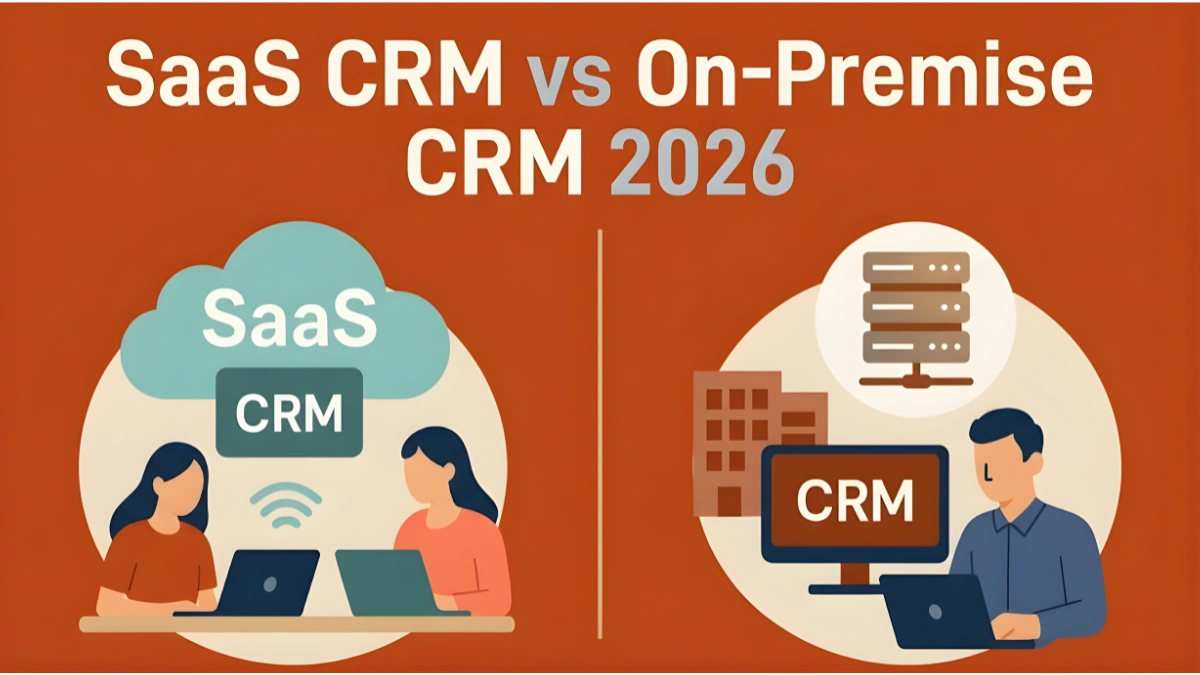
Choosing between cloud-based CRM software and on-premise CRM remains one of the most important software decisions for businesses planning customer management, automation, and long-term digital growth. Both models continue serving different business priorities because software deployment affects cost structure, scalability, compliance, and operational flexibility.
In high-value enterprise software markets, SaaS CRM and on-premise CRM comparisons attract strong advertiser demand because companies actively compare long-term software cost, infrastructure control, security requirements, and implementation complexity before making contracts. Businesses that choose the right deployment model usually improve software ROI and avoid costly restructuring later.
How SaaS CRM Works for Modern Businesses
SaaS CRM is delivered through cloud infrastructure, which means businesses access the software through web-based platforms without managing internal servers.
Main business advantages include:
- Lower initial cost
- Fast deployment
- Remote accessibility
- Automatic updates
- Easier feature expansion
This makes SaaS CRM highly attractive for growing businesses.
Why On-Premise CRM Still Matters
On-premise CRM remains important for businesses that require deeper infrastructure control and internal ownership of data systems.
It usually appeals to organizations that need:
- Local server deployment
- Full security oversight
- Internal customization control
This is especially common in regulated sectors.
Direct Comparison of SaaS and On-Premise CRM
| Feature | SaaS CRM | On-Premise CRM |
|---|---|---|
| Deployment | Cloud-based | Local infrastructure |
| Cost Model | Subscription pricing | High upfront investment |
| Maintenance | Provider-managed | Internal IT management |
| Customization | Moderate flexibility | High customization |
| Accessibility | Anywhere with internet | Limited without remote setup |
Why SaaS CRM Continues Growing Faster
Cloud adoption continues increasing because businesses want software that can expand quickly without hardware investment.
Strong SaaS benefits include:
- Faster user onboarding
- Lower technical burden
- Continuous updates
- Easier integrations
This often reduces total deployment friction.
When On-Premise CRM Becomes the Better Option
Some businesses still choose on-premise because internal control matters more than deployment speed.
It is often preferred in:
- Healthcare
- Financial services
- Government sectors
These industries often require tighter control over sensitive data.
Cost Differences Beyond Subscription Pricing
Software pricing alone rarely tells the full story.
SaaS CRM often appears cheaper early because hardware and internal support needs remain low.
On-premise CRM usually requires:
- Server investment
- IT maintenance
- Upgrade planning
This increases early cost but may fit long-term internal strategies.
Customization and Workflow Control
On-premise CRM usually allows deeper modification because businesses control system architecture directly.
SaaS CRM still supports customization, but limits usually depend on provider rules.
The choice often depends on whether flexibility or speed matters more.
Security and Compliance Considerations
Both models can be secure, but control differs.
SaaS CRM providers manage security centrally and apply updates automatically.
On-premise systems give businesses direct control over:
- Security policies
- Update timing
- Access architecture
This matters where compliance pressure is high.
How Business Size Influences the Right Choice
Smaller and growing companies usually benefit more from SaaS because speed and cost matter most.
Larger regulated organizations often prefer on-premise when internal governance is strict.
The right decision depends on practical workflow needs.
FAQs
1. Which CRM costs less for small businesses?
SaaS CRM usually costs less early.
2. Is on-premise CRM safer?
It offers stronger internal control.
3. Can SaaS CRM scale faster?
Yes, scaling is usually easier.
4. Does on-premise require IT teams?
Yes, ongoing technical support is important.
5. Which CRM is better for regulated industries?
On-premise often fits stricter sectors.
Conclusion: SaaS CRM and on-premise CRM both remain valuable, but they solve different business priorities. SaaS works best for speed, flexibility, and lower entry cost, while on-premise remains stronger where internal control, customization, and compliance dominate decision-making.
Disclaimer: This article is for informational purposes only. CRM pricing, security models, and software capabilities may change depending on provider updates and deployment requirements. Businesses should verify official platform details before making final decisions.