
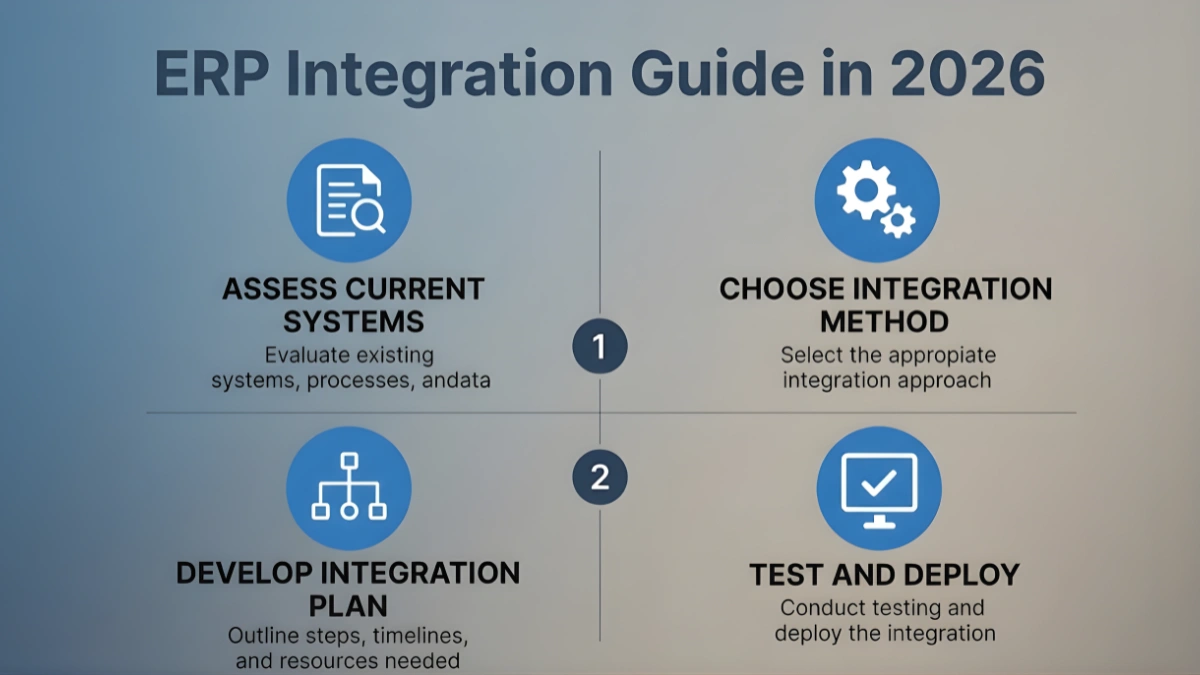
For businesses managing finance, inventory, operations, customer records, and reporting across multiple platforms, ERP software becomes most powerful when it is fully connected with the systems already running daily operations. A modern ERP platform is designed to unify business processes, but real operational value appears when accounting tools, CRM systems, e-commerce platforms, supply chain tools, and internal reporting systems exchange data automatically without delays.
In high-value enterprise software markets, ERP integration topics attract strong advertiser demand because companies investing in ERP usually make long-term technology decisions that directly affect productivity, compliance, and scalability. Businesses that integrate ERP correctly often reduce manual work, improve reporting accuracy, and create a more reliable foundation for future growth
Why ERP Integration Matters for Modern Businesses
Many organizations already use several business systems before adopting ERP. Without integration, each department often works with isolated data, which creates reporting gaps and delays.
Main advantages of ERP integration include:
- Unified business data
- Automated cross-system workflows
- Better operational visibility
- Faster decision-making
- Reduced manual duplication
This is why ERP integration has become a priority in digital transformation strategies.
Business Systems Commonly Connected with ERP
ERP platforms usually work best when linked with the systems businesses rely on most.
The most common integrations include:
- CRM platforms for customer and sales data
- Accounting software for financial control
- E-commerce systems for order and inventory visibility
- Supply chain tools for logistics tracking
- HR systems for payroll and employee records
This creates a connected business environment rather than isolated software layers.
ERP Platforms with Strong Integration Capabilities
| ERP Platform | Integration Strength | Common Connected Systems | Best For |
|---|---|---|---|
| Oracle NetSuite | Strong cloud APIs | CRM, e-commerce, finance tools | Mid-size to large businesses |
| Microsoft Dynamics 365 | Microsoft ecosystem strength | CRM, BI tools, Office systems | Businesses using Microsoft tools |
| SAP S/4HANA | Enterprise-grade integration | Global operations, finance systems | Large enterprises |
| Odoo ERP | Modular open integration | E-commerce, accounting, CRM | Cost-focused growing businesses |
Choosing the Right Integration Method
ERP integration usually succeeds when businesses choose a method that matches technical complexity and future growth plans.
Many companies prefer API-based integration because APIs allow real-time data movement and stronger long-term flexibility. Where systems are more complex, middleware platforms are often used to connect multiple applications safely.
For smaller environments, built-in connectors often reduce setup time significantly.
Data Preparation Before ERP Connection
Before any ERP integration begins, existing business data should be reviewed carefully.
Important preparation areas include:
- Removing duplicate records
- Standardizing formats
- Verifying field consistency
This reduces errors once systems begin exchanging live information.
How ERP Improves Department Coordination
When ERP is fully integrated, departments begin working from shared information rather than isolated reports.
This improves:
- Sales visibility
- Inventory control
- Financial reporting
- Procurement timing
As a result, decision-making becomes faster.
Challenges Businesses Should Expect
Even strong ERP systems can face integration challenges when planning is weak.
Common problems include:
- Field mismatch between systems
- Delayed syncing
- Cost overruns
- User resistance
These issues usually decrease when testing is done properly before full rollout.
Why Cloud ERP Is Growing Faster
Cloud ERP platforms now dominate because integration is usually easier and updates remain continuous.
Main cloud advantages include:
- Faster deployment
- Lower infrastructure cost
- Better remote accessibility
This is one reason cloud ERP adoption continues rising.
Future ERP Integration Trends
ERP integration is increasingly shaped by AI and automation.
Growing trends include:
- AI-driven data mapping
- Low-code integration tools
- Real-time analytics connections
These changes continue improving deployment speed.
FAQs
1. Which ERP is easiest to integrate with existing tools?
Odoo and Microsoft solutions are often easier for mid-size businesses.
2. Is API integration necessary for ERP?
Not always, but APIs offer stronger flexibility.
3. Can ERP connect with CRM software?
Yes, this is one of the most common integrations.
4. Does ERP integration improve reporting?
Yes, because data becomes centralized.
5. Is cloud ERP better for integration?
Often yes, especially for scalability.
Conclusion: ERP integration has become essential because businesses now depend on connected systems rather than isolated software. Organizations that integrate ERP carefully usually improve efficiency, reduce manual workload, and build stronger long-term operational control across departments.
Disclaimer: This article is for informational purposes only. ERP pricing, integrations, and software capabilities may change depending on provider updates and business requirements. Companies should verify official platform details before implementation.