
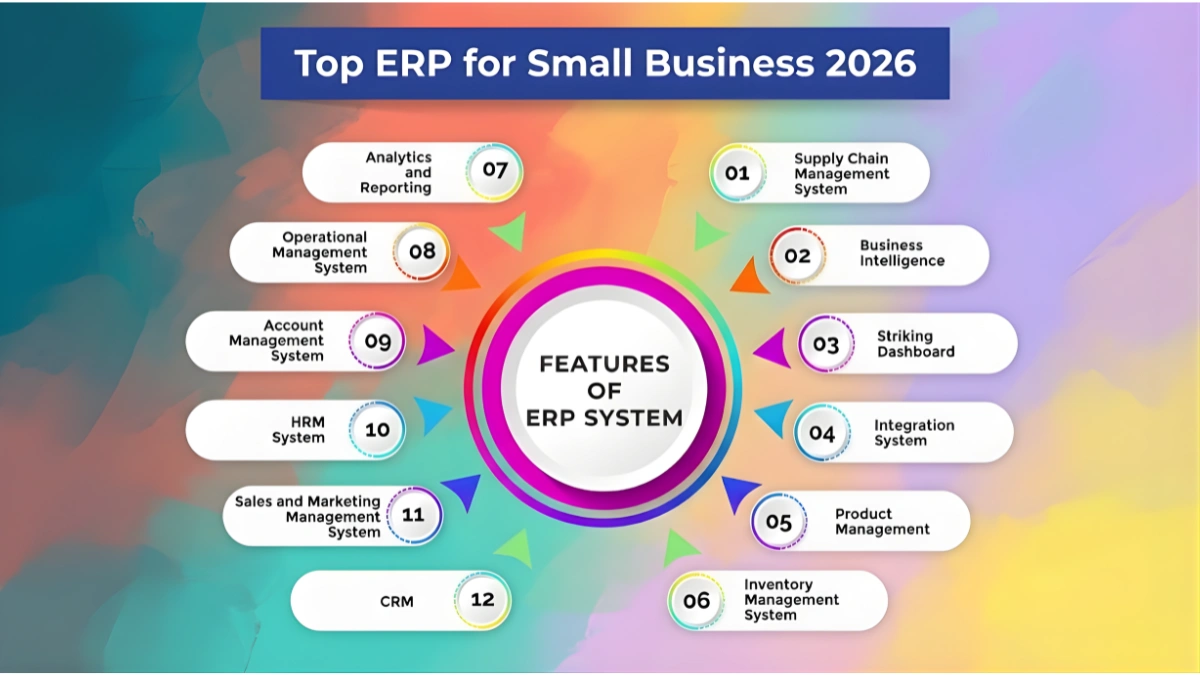
For small businesses, choosing the right ERP software has become one of the most important technology decisions because daily operations now depend on accurate inventory control, financial visibility, order tracking, and workflow automation. A well-chosen ERP platform helps small companies reduce manual tasks, improve reporting, and create stronger control across departments without requiring enterprise-level budgets.
In high-value business software markets, ERP topics for small businesses attract strong advertiser demand because growing companies actively compare pricing, scalability, and implementation complexity before investing. Businesses that adopt the right ERP early often improve efficiency and avoid costly system changes later
Why Small Businesses Need ERP Software
As small businesses grow, separate tools for inventory, accounting, sales, and purchasing often create inefficiency.
ERP software helps unify operations by supporting:
- Inventory management
- Accounting control
- Order tracking
- Supplier visibility
- Reporting automation
This improves operational accuracy.
Best ERP Platforms for Small Business
| ERP Platform | Main Strength | Best For | Starting Cost |
|---|---|---|---|
| Odoo ERP | Modular flexibility | Growing small businesses | Low-cost scalable plans |
| Oracle NetSuite | Cloud ERP depth | Expanding businesses | Custom pricing |
| Microsoft Dynamics 365 Business Central | Finance + operations integration | Microsoft-based businesses | Mid-range pricing |
| ERPNext | Open-source control | Cost-sensitive businesses | Open-source / hosting cost |
Why Odoo Is Highly Popular for Small Businesses
Odoo remains one of the strongest choices because businesses can begin with core modules and expand gradually.
Strong advantages include:
- Modular pricing
- CRM + accounting support
- Easy expansion
This makes it practical for smaller budgets.
NetSuite for Long-Term Growth
NetSuite performs strongly where businesses expect rapid growth and want strong cloud ERP capability from the beginning.
Its strongest benefits include:
- Cloud accessibility
- Financial depth
- Strong reporting
This suits businesses planning larger scaling.
Microsoft Dynamics for Structured Business Operations
Dynamics 365 Business Central remains attractive where businesses already rely on Microsoft systems.
Popular strengths include:
- Office integration
- Financial visibility
- Process control
This often improves adoption speed.
ERPNext for Low-Cost Flexibility
ERPNext remains attractive for businesses that want strong ERP control without heavy licensing pressure.
Its advantages include:
- Open-source access
- Custom workflow flexibility
- Broad modules
This suits technically capable businesses.
Features Small Businesses Should Prioritize
Before selecting ERP, businesses should compare:
- Ease of setup
- Inventory tools
- Accounting integration
- Reporting clarity
These affect daily value more than feature volume.
Why Scalability Matters Early
Many small businesses choose ERP only for current needs, but software should also support future growth.
Important scalability areas include:
- More users
- More locations
- More automation
This avoids expensive switching later.
How ERP Improves Small Business Productivity
Businesses often see gains because ERP reduces repeated manual work.
Typical improvements include:
- Faster invoicing
- Better stock accuracy
- Stronger purchase planning
FAQs
1. Which ERP is easiest for small businesses?
Odoo is often one of the easiest starting points.
2. Is ERPNext good for low budgets?
Yes, especially for cost-sensitive businesses.
3. Can small businesses use NetSuite?
Yes, especially growth-focused companies.
4. Does ERP improve inventory control?
Yes, significantly.
5. Is cloud ERP better for small businesses?
Often yes, because maintenance stays lower.
Conclusion: ERP software has become highly valuable for small businesses because operational accuracy now directly affects profitability and growth. Businesses that choose the right ERP early usually improve efficiency, reporting, and long-term scalability.
Disclaimer: This article is for informational purposes only. ERP pricing, modules, and software capabilities may change depending on provider updates and subscription plans. Businesses should verify official platform details before selecting software.